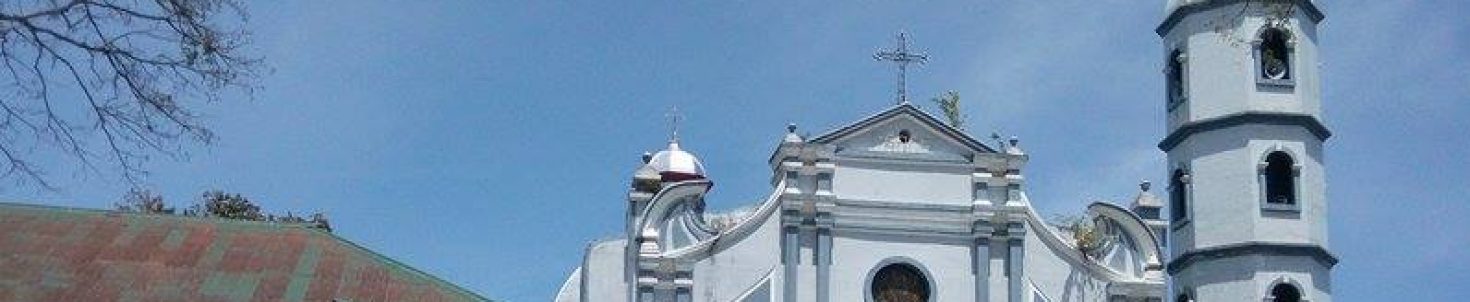
Third Issue • August 2021   While the world is still fighting the COVID-19 pandemic, we try to continue doing the things we want to do and adapt to the changes however way we can. We strive to keep on learning, discover our passions in the process, and hope that we are making a difference in the world. For this issue of We, Lasallians, we take a look at the different passions of our faculty and alumni—from preserving a historical heritage, to learning more about nanotechnology, and to finding your niche in corporate investments and real estate. As a community of learners, we celebrate them and their passions amid the challenges of our times.  Story 2 Half a Century After Graduation, De La Salle is My Partner in Preserving a Historical Heritage Marlou O. Castillo LIACOM ’72 Almost half a century ago, I graduated from De La Salle College, now University, with dual degrees in Liberal Arts and Business Administration. Lia-Com, as it was called, was one of the more popular courses of study at De La Salle at that time. And why not? For slugging it out for another year, you get an extra degree! For my Liberal Arts degree, I majored in Economics which involved writing a thesis on some lofty topic in Economics (what else!) as a requirement for graduation. Initially, I had no clue what to write about. But I was aware that the baptismal, matrimonial, and burial records of the Catholic Church in my hometown of San Jose, Batangas, from the time the town was founded in the 1760s, were still extant. I had also studied models, such as the Malthusian Theory of Population, which demonstrates the link between economics and demography. So, I asked the Chair of Economics Department if I could use these centuries-old demographic records for my thesis. Father Georges Piron readily agreed and was even gung-ho on the idea. Fr. Piron, reputed to be one of the best econometricians in the country at that time, is a Belgian priest in the CICM order. However, he told me that there was a slight problem –there was no demography expert at De La Salle who could be my thesis adviser. But he solved that problem himself by requesting that the University of the Philippines Population Institute (UPPI) “lend” one of their professors to work with me. And that was how I met Dr. Thomas Hollingsworth, a visiting professor from the University of Glasgow in Scotland. I could barely understand him with his Scottish accent and he probably could barely understand me with my Batangas accent, but no matter, we hit it off. And so, one nice Saturday morning in February 1970, Fr. Piron, Dr. Hollingsworth and I drove to San Jose in Fr. Piron’s old VW Beetle to check out the centuries-old ecclesiastical books –unannounced, because mobile phones had not been invented yet, and the Parish Priest, Fr. Lucio Aguilar, OSJ, did not even have a land line. But the visit went well, and the two gentlemen were impressed by what they saw. During the next ten months or so, I would go to San Jose every weekend to pore over the demographic records of the last two and a half centuries. These included an ecclesiastical census of 1887 called Padron General de Almas de Esta Parroquia del Pueblo de S. Jose. I recorded monthly baptisms, marriages and burials; and established average family and household sizes, and sex and dependency ratios using the 1887 census. I found that burials vastly exceeded baptisms during certain years, leading me to conclude that these were periods of epidemics, which I had never before encountered in history books. To my dismay, I also learned that native Filipinos were listed as Indios in the church registers up until the early 1900s. I also realized that these paper records, although in relatively good condition, were fragile, and made a mental note to preserve them someday. Once I had completed my archival research, I proceeded to write my thesis, which I titled “San Jose, Batangas: A Study in Historical Demography”, during my senior year and the summer before my terminal year. To my surprise, the paper garnered the Gold Medal for Research in Economics in 1972. Fast forward 46 years. After a nearly 40-year banking career and raising 3 children, I saw the San Jose ecclesiastical records again. That was in February 2018 and, this time, I was with my daughter, Elise, and her husband, Nick, who were visiting the Philippines with my wife, Leah, and me. Having read my thesis, they were curious to see those centuries-old records. Much of what we saw fascinated them. I was also fascinated by details I missed in 1970. For example, during the Spanish colonial years, infants were baptized within a few days after birth and were predominantly named after popular saints whose feast days fell during the months they were born. This practice changed after the Spanish friars left, and March 19, the feast day of the town’s patron saint, became the most popular day for baptisms in the parish. We also located the baptismal registers of my maternal grandparents and my mother. But I was also terribly upset by what we saw. The deterioration of those records since the 1970s had been so pervasive that if nothing is done, they will be irretrievably lost in maybe a few decades. For example, the pages on many books were torn and decaying with spines barely intact. Attempts over the years to repair torn pages with transparent tape only exacerbated the damage. Several volumes appeared to be beyond repair. Surprisingly though, the ink on the oldest records from the 1760s to early 1800s was still vibrant, but the text on many subsequent records had faded. I recalled the mental note I made in 1970 to preserve these records for posterity someday. Someday has arrived; there is now a greater sense of urgency to do something. I thus resolved to embark on a project to preserve those archival records. Elise and Nick gave me a lot of encouragement and have been active participants from the start of this initiative. During that same trip to the Philippines, we visited Museo de La Salle in DLSU-Dasmariñas where we met Ms. Cecille Torrevillas-Gelicame, Director of the Museum. I asked Ms. Gelicame how I might go about preserving these historical documents. She pointed me in the direction of the National Commission for Culture and the Arts (NCCA). I contacted NCCA and, with Ms. Gelicame’s endorsement, an archival expert from the NCCA travelled to San Jose to conduct a physical assessment of the records. The expert also prepared a report describing the condition of the books and recommending specific courses of action on how to preserve them. After reading the NCCA report, it did not take very long for me to realize that a proper documentary heritage preservation project requires expertise I do not have. So, having obtained the enthusiastic support of Fr. Edwin Tolentino, OSJ, Parish Priest of San Jose, to pursue a historical preservation project, I set out to assemble an Advisory Board composed of individuals from relevant fields and disciplines to provide thought leadership and expertise in steering such a project. In July 2019, I came across an article in the DLSU on-line newsletter, Arrow, about DLSU’s successful partnership with the National Historical Commission of the Philippines to document and record the Ivatan people’s tradition of constructing houses and building boats before those are completely forgotten. I thought this Batanes Documentation Project would be a great model for what we are trying to achieve in San Jose. After all, NCCA is already involved. I thus contacted Br. Ray Suplido, FSC, President of DLSU, to inquire if DLSU might be interested in a similar partnership with us. He forwarded my e-mail to Dr. Jazmin Llana, Chair of the College of Liberal Arts, and Dr. Ma. Florina Orillos-Juan, Chair of History Department, for their consideration. Both expressed interest in the proposition and we agreed to meet in January 2020. During our meeting, we identified four work streams to pursue. These included cataloging the archival books as part of the practicum for DLSU History majors, requesting a grant from the NCCA for the establishment of an archive, and writing a book on the history of San Jose based on the old demographic and canonical records. (Cataloging, scheduled to be done last term, was postponed for a future term because of the students’ inability to travel to San Jose due to the pandemic; they instead researched archival design best practices, helped design the archive, and prepared the cost estimates.) Dubbed “Kasaysayan ng San Jose: Preserving a Historical Heritage”, the project was recently awarded a grant by the NCCA under its 2021 Competitive Grants Program to partially finance the establishment of an archive. The project is now in implementation mode and, barring additional pandemic-induced delays, we are looking to have an archive in the Parish to house these centuries-old records in physically and environmentally safe conditions by mid-2021. We even have a name for the archive: Archivo de San José de Malaquing Tubig to commemorate the name of the town when it was founded in 1767. This website provides a good description of this historical heritage preservation project: https://kasaysayansj.com/ Launching and working on this project has been highly rewarding, and is also a productive way of spending time, especially during the pandemic lockdown. That my alma mater is a partner in this initiative is extremely gratifying. Not coincidentally, half of the members of the Project Advisory Board are connected with De La Salle: a History professor, a museum curator, and an alumnus. My hope is that Kasaysayan ng San Jose will make it possible for future generations of students to use the archive for their research. Perhaps another student with no idea what to write for her thesis will find inspiration in the archive, as I did 50 years ago. Produced by the Office for Strategic Communications August 2021 |
 Kasaysayan ng San Jose